
Sliding door locks come in several types, including mortice, surface-mounted, keyed, digital, patio bolts and specialty security locks. The right option depends on the door construction, material, security requirements, intended use and existing lock configuration.
For Australian residential and commercial applications, the lock should also be considered as part of the complete door assembly. The door material — such as glass, aluminium or timber — can affect which lock types can be installed and how they should be configured.
-
- Mortise & Hook Locks: The standard primary lock; use a hook-style bolt to prevent the door from being easily jimmied open.
- Double-Bolt Locks: Heavy-duty secondary locks that secure the door to the frame at two points, making it nearly impossible to lift the door off its tracks.
- Multi-Point Systems: Premium locks that engage at the top, middle, and bottom simultaneously for maximum structural strength.
- Security Bars (Charlie Bars): A visible metal rod that physically blocks the door from sliding; one of the most effective and affordable deterrents.
- Foot Locks: Mounted at the bottom of the door; operated by foot to provide a quick secondary layer of security while you are home.
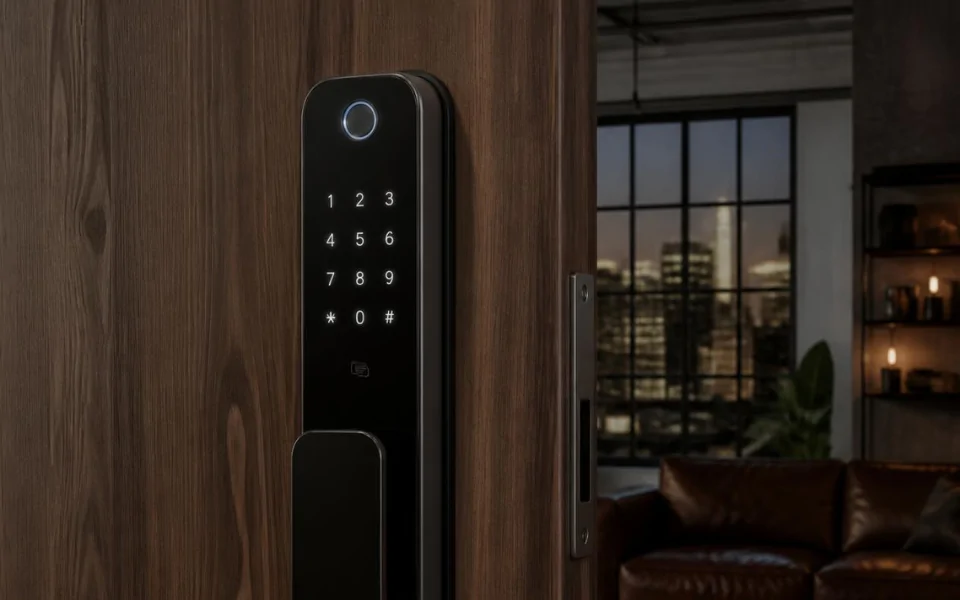
- Smart Locks: Keyless options using codes or apps to monitor and control access remotely.

What Are the Main Types of Sliding Door Locks?
The main types of sliding door locks include mortice locks, hook bolt locks, keyed cylinder locks, multi-point locks, surface-mount
ed bolts, security bars and electronic locks. The most suitable option depends on the door construction, security requirements and whether the lock is used as a primary or secondary locking device.
1. Built-In and Primary Sliding Door Locks
Built-in and primary locks form the main locking mechanism and are typically integrated into the sliding door or frame. They are generally selected when the door requires a dedicated locking system rather than an additional security device.

-
-
- Hook Bolt Locks: Use a curved hook-shaped bolt that engages with the strike to secure the sliding panel and help resist forced opening.
- Mortice Locks: Fit inside a pocket cut into the door stile, providing a recessed locking mechanism and cleaner appearance.
- Cylinder and Keyed Locks: Use a key-operated cylinder for controlled locking and unlocking, commonly found on external patio and balcony doors.
- Multi-Point Locks: Engage at multiple points along the door frame to distribute the locking force and provide additional resistance against forced entry.
-
For automated entrances, the locking mechanism should also be coordinated with the wider automatic door system and associated hardware.
2. Secondary and Auxiliary Sliding Door Locks
Secondary locks provide an additional physical barrier and can complement the primary locking mechanism. They are often used where additional restriction of door movement or supplementary security is required.
-
-
- Sliding Security Bars: Adjustable bars or rods can restrict the door from sliding open and provide an additional layer of physical security.
- Foot Bolts / Patio Bolts: Surface-mounted bolts can restrict door movement and help prevent unwanted opening.
- Loop and Latch Locks: Use a loop or latch mechanism to secure the sliding panel from the inside.
-
Professional assessment: A secondary lock should not automatically be treated as a replacement for the primary locking system. The door, frame, track and existing lock should be assessed as a complete security arrangement.

3. Electronic and Smart Sliding Door Locks
Electronic and smart locks provide keyless or electronically controlled access and can be useful where convenience or access management is important. The appropriate system depends on the door configuration and whether integration with other access-control equipment is required.
-
-
- Keypad Locks: Users enter a PIN instead of using a conventional key.
- Fingerprint Locks: Biometric authentication can provide controlled access for selected applications.
- App-Controlled Locks: Some systems allow users to manage access through a compatible mobile application.
- Electronic Access-Control Locks: Can integrate with broader building access-control systems where compatible hardware is used.
-
These systems can also work alongside access control systems where authorised entry needs to be managed electronically.
Best suited to: Modern residential properties, offices, apartments and controlled-access areas.

4. Flush and Barrel Bolts
Flush bolts and barrel bolts are simple mechanical locking options that can suit selected lightweight or internal sliding-door applications. Their relatively simple construction makes them suitable where a basic mechanical locking function is required.
-
-
- Flush Bolts: Installed into the door for a relatively unobtrusive appearance.
- Barrel Bolts: Surface-mounted mechanical bolts that are simple to operate.
- Best suited to: Internal doors, lightweight sliding doors and selected double-sliding configurations.
-

5. Anti-Lift and Track Security Devices
Anti-lift devices address a different security consideration from the primary lock by helping prevent the sliding panel from being lifted out of its track. They can provide an additional layer of protection where the track and panel construction create a potential lifting vulnerability.
They can include:
-
-
- Anti-lift blocks
- Security pins
- Track-mounted security devices
- Additional retaining hardware
-
Professional assessment: A sliding door can remain locked while still presenting a security weakness if the panel can be lifted from the track. Locking hardware and anti-lift protection should therefore be considered separately when assessing the overall security of a sliding door.

Sliding Door Lock Types Comparison
| Lock Type | How It Works | Security Level* | Installation | Best Suited For |
| Hook Bolt Lock | Hook-shaped bolt engages with the strike to secure the sliding panel | High | Usually integrated into the door stile | Patio and external sliding doors |
| Mortice Lock | Lock body is recessed inside the door frame or stile | Medium–High | Mortice installation required | Aluminium, timber and selected glass-framed doors |
| Multi-Point Lock | Locks the door at two or more points along the frame | High | More complex installation | External doors requiring stronger security |
| Keyed Cylinder Lock | Key-operated cylinder controls locking and unlocking | Medium | Surface-mounted or integrated depending on system | Residential and commercial entrances |
| Sliding Security Bar | Physical bar prevents the door from sliding open | Medium | Surface-mounted or track-mounted | Additional security for residential doors |
| Patio / Foot Bolt | Mechanical bolt restricts movement of the sliding panel | Medium | Usually surface-mounted | Patio and balcony doors |
| Electronic / Smart Lock | Uses keypad, fingerprint, app or electronic credentials | Medium–High** | Requires compatible hardware and sometimes power | Modern residential and controlled-access applications |
| Flush / Barrel Bolt | Sliding mechanical bolt physically secures the door | Low–Medium | Simple surface or recessed installation | Internal and lightweight sliding doors |
| Anti-Lift Device | Prevents the sliding panel from being lifted out of its track | Additional security | Installed around the panel or track | Doors requiring additional anti-lift protection |
Which Lock Materials Are Suitable for Different Sliding Door Types?
The best lock depends on the door construction and application. A lock suitable for an aluminium-framed patio door may not be suitable for a frameless glass door or cavity sliding door. Before selecting a replacement, check the door material, available mounting space, existing hardware and how the lock engages with the frame.
Sliding Glass Door Locks
Sliding glass doors require lock hardware that is compatible with the glass configuration, frame and available fixing points. Framed glass doors may accommodate different locking arrangements from frameless systems, so the lock should be selected around the actual door construction.
Key considerations include:
-
-
- Glass + aluminium frame: Check the available frame or stile space before selecting an integrated lock.
- Frameless glass: Confirm that the locking hardware is specifically designed for the glass-door configuration.
- Mortice vs surface-mounted: The installation method should match the construction and available fixing space.
- Hardware compatibility: Check the lock, keeper, handle and surrounding hardware as one system.
-
For applicable external glazed-door applications, the relevant Australian requirements should also be checked against the current project documentation. 1Standards Australia — AS 2047:2014, Windows and external glazed doors in buildings. Date of access on 26/08/2026↓
Professional assessment: One common mistake is selecting a replacement lock based only on the appearance of the existing hardware. For glass doors, the frame profile, fixing points and keeper position can determine whether a replacement lock will actually fit and operate correctly.
Aluminium Sliding Door Locks
Aluminium sliding doors often require locks that fit within the available stile and match the existing lock preparation. Even locks that appear similar can have different body dimensions, backsets or keeper positions.
Key considerations include:
-
-
- Residential and commercial applications: The required lock type can vary according to the door’s use and security requirements.
- Existing lock body dimensions: Measure the current lock before selecting a replacement.
- Stile thickness: Confirm that the lock body and fixing arrangement fit within the aluminium profile.
- Keeper alignment: The bolt or hook must engage correctly with the keeper when the door is fully closed.
-
Professional assessment: For an existing aluminium sliding door, measuring before ordering is one of the most important checks. A small difference in lock-body dimensions or keeper position can make an otherwise suitable-looking lock incompatible with the door.
Practical check:
Existing lock → Door thickness → Lock dimensions → Keeper → Handle → Alignment → Replacement
Timber Sliding Door Locks
Timber sliding doors generally allow more flexibility for recessed hardware, but the door construction still determines which lock can be installed. Cavity and pocket doors may require a different arrangement from surface-mounted sliding doors.
Key considerations include:
-
-
- Cavity/pocket doors: Check the available internal space before selecting a mortice or recessed lock.
- Flush pull + privacy lock: Can provide a cleaner appearance for internal sliding doors.
- Key-operated options: May be appropriate where additional privacy or controlled locking is required.
- Door thickness: Confirm the lock body and fixing depth are suitable for the timber panel.
-
Professional assessment: With timber sliding doors, the available door thickness and internal cavity space can be more important than the lock’s external appearance. A lock may look suitable but still be unsuitable if the door cannot accommodate the required recess.
Sliding Screen Door Locks
Sliding screen door locks are generally designed around lightweight door construction, so the lock, latch and keeper need to be matched to the screen frame. They are typically less substantial than primary locks used on external sliding doors.
Key considerations include:
-
-
- Lightweight construction: Select hardware designed for the screen-door frame rather than adapting heavy-duty door hardware.
- Latch/keeper compatibility: Ensure the latch engages cleanly when the screen door is closed.
- Security requirements: Determine whether the screen door needs basic latching or additional security.
- Frame condition: Check for damage, movement or misalignment before replacing the lock.
-
Professional assessment: Based on the experience of a DHS specialist with 10 years of experience in door and access systems, sliding door lock issues should be assessed as part of the complete door assembly rather than looking at the lock alone.
For example, when a screen-door lock repeatedly comes out of alignment, the underlying cause may be worn rollers, frame movement or poor door alignment. Checking these components before replacing the lock can help identify the actual problem and avoid unnecessary hardware replacement.
In Australian projects, DHS recommends checking the door frame, rollers, track, latch, keeper and existing lock configuration before selecting replacement hardware, particularly for frequently used entrances.
What Australian Building Requirements Can Affect Sliding Door Lock Selection?
Sliding door lock selection should consider the applicable building, accessibility, fire-safety and egress requirements for the specific project. The exact requirements depend on the building type, location of the door and how the entrance is intended to be used.
The National Construction Code (NCC) should be checked for the current building requirements applicable to the project. 2Australian Building Codes Board — National Construction Code. Date of access on 26/08/2026↓
How Can Accessibility Requirements Affect Sliding Door Locks?
Accessibility requirements can affect the choice and operation of sliding door hardware where the door forms part of an accessible path or entrance. The lock should work with the overall doorway arrangement rather than create unnecessary difficulty for the intended users.
Key considerations include:
-
-
- Door hardware: Select hardware that is practical to operate and compatible with the door configuration.
- Controls: Where automatic or electronic locking is used, controls should be positioned and configured appropriately for the application.
- Operating force: Where applicable, consider the force required to operate the door and associated hardware.
- Clear access: The locking arrangement should not compromise the required clear access or circulation space.
-
Professional assessment: A lock can be technically compatible with a door but still create a practical problem if the handle, lock or control position makes the entrance difficult to use. DHS recommends assessing the lock, door movement, access path and controls together rather than selecting hardware in isolation.
How Can Egress Requirements Affect Sliding Door Locks?
A sliding door that forms part of a required exit needs a locking arrangement that does not unnecessarily impede occupant egress. The applicable requirements depend on the building and the specific role of the doorway within the exit path.
Key considerations include:
-
-
- Required exits: Determine whether the sliding door forms part of a required exit or path of egress.
- Locking arrangements: Check how the lock operates from the egress side and whether additional hardware or controls affect exit.
- Readily openable requirements: Consider whether occupants can operate the door without inappropriate difficulty or delay.
- Emergency conditions: Where applicable, coordinate the lock with the project’s fire and emergency systems.
-
The NCC Performance Requirements address safe movement to and within buildings and the need to avoid situations where occupants could have their egress impeded or become trapped.
Professional assessment: Do not assume that a lock is compliant simply because it is marketed for a particular type of sliding door. For commercial projects, the door, locking arrangement, exit path and relevant building requirements should be reviewed together.
Important: There is no single Australian requirement that applies identically to every sliding-door lock. The applicable provisions depend on the building classification, door location, intended use and whether the door forms part of an accessible path or required exit. Check the current NCC, relevant Australian Standards and project documentation before final specification.
FAQs
A hook bolt is better suited to sliding doors because it creates a mechanical interlock with the frame. Unlike a straight deadbolt, it helps resist lateral prying, vertical lifting and minor frame movement, making it harder to force the sliding panel away from the frame or out of its track.
A single-point lock secures the door at one location, while a multi-point locking system engages the frame at several points, typically across the top, middle and bottom. This distributes the locking force and can provide better resistance to forced entry, improved anti-lift protection and a more consistent seal along the door.
In general, single-point locks are simpler and more affordable, while multi-point systems are more complex and typically require more specialised installation and maintenance.
Yes, but slim aluminium frames have limited space for locking hardware. Choose a narrow-stile smart lock and check the style width, backset, lock dimensions and bolt type before installation. A hook-bolt mechanism is generally more suitable for sliding-door applications than a standard straight deadbolt.
A mortise lock generally provides stronger primary security because its mechanism is recessed inside the door, while a surface-mounted lock can provide useful additional protection against lifting and forced movement.
-
-
- Mortise locks: Offer a concealed mechanism, cleaner appearance and good resistance to tampering and prying.
- Surface-mounted locks: Are easier to retrofit and can provide additional anti-lift protection, particularly when positioned at the top or bottom of the door.
- Best overall approach: For higher-security applications, a mortise lock as the primary lock combined with a suitable secondary or anti-lift device can provide more comprehensive protection.
-
Professional assessment: The lock should not be assessed in isolation. The door, frame, track, rollers, keeper and installation quality all contribute to the overall security of a sliding door.
A Double Bolt Lock can provide strong protection against sliding-door lifting by securing the panel firmly to the frame. For additional protection, combine it with a Security Bar and Anti-Lift Blocks, which help restrict vertical movement and prevent the door from being lifted out of its track.
-
-
- Double Bolt Lock: Provides additional physical restraint against lifting and forced movement.
- Security Bar: Adds a rigid secondary barrier between the door and frame.
- Anti-Lift Blocks: Reduce the available space between the door and upper track, helping prevent the panel from being lifted.
-
Professional assessment: The most effective approach is to consider the lock, track, rollers, frame and anti-lift protection together. A strong lock alone cannot compensate for excessive movement or weaknesses elsewhere in the sliding-door assembly.
Final Thoughts
The right sliding door lock depends on the door construction, security requirement and intended use. Mortice, surface-mounted, keyed, digital and secondary security solutions each address different requirements.
Before replacing a lock, check the existing door dimensions, keeper, frame and track as well as the lock itself. For commercial or automated applications, consider the complete door, locking and access-control system rather than selecting the lock in isolation.




