
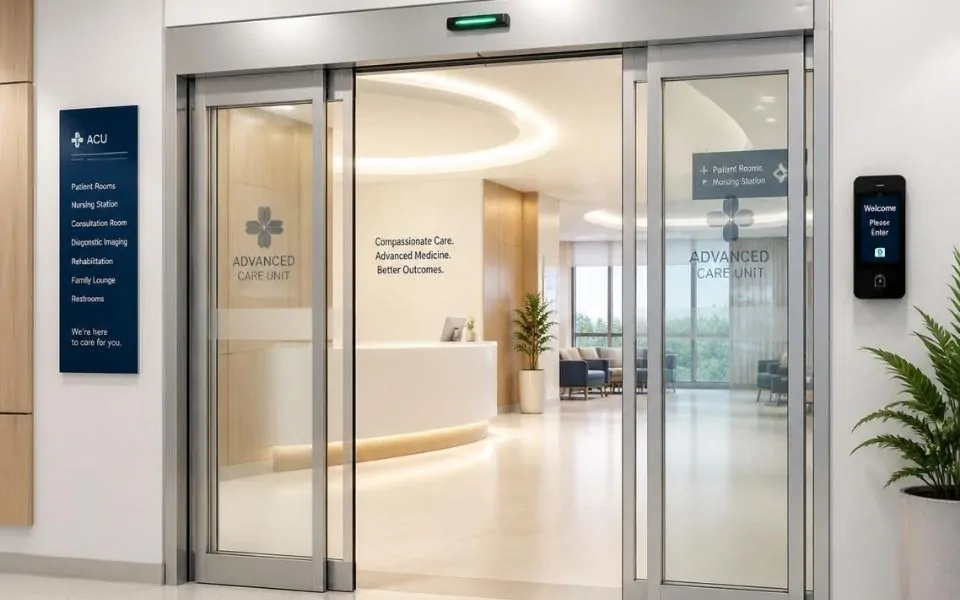
In hospitals and clinics, every minute counts. Healthcare workers, patients, and visitors are constantly moving between departments, operating rooms, and treatment areas. In such a busy work environment, the use of traditional doors can create a lot of friction. That is where hospital automatic doors, especially automatic swing door systems, come into play. Using these types of doors eliminates the need for physical contact, reduces the risk of infection, and improves mobility throughout the facility.
- Infection Control: Touchless activation (wave-to-open or motion sensors) is the primary defense against the spread of germs and Healthcare-Associated Infections (HAIs).
- Emergency “Breakout”: Most hospital sliding doors feature a breakaway function, allowing panels to swing outward manually for rapid evacuation or to move oversized medical equipment.
- Airtight Performance: Specialized Hermetic doors are used in Operating Rooms (ORs) and isolation wards to maintain air pressure and prevent the spread of airborne contaminants.
- ICU Privacy: Automatic doors for patient rooms often use “Smart Glass” (switches from clear to opaque) or integrated blinds to provide instant privacy without the hygiene risks of curtains.
- High-Sensitivity Sensors: Sensors must be calibrated to detect stationary objects, such as IV poles, wheelchairs, or patients moving at very slow speeds, to prevent accidental closure.
- Durability & Reliability: Designed for 24/7 heavy-duty cycles and equipped with battery backups to ensure functionality during power outages.
- Regulatory Compliance: Must meet strict life-safety and accessibility codes (e.g., ADA, NFPA 101, and ANSI/BHMA) regarding opening widths, smoke seals, and closing speeds.
What Is a Hospital Automatic Door?
A hospital automatic door is an automated entry system that opens and closes without the need for manual force. Using motion sensors, push plates, or touchless switches, these doors detect people approaching and respond automatically. In healthcare environments, they’re designed to maintain hygiene, comply with accessibility laws, and ensure patient and staff safety.

Automatic doors in hospitals typically include sliding doors, swing doors, and hermetically sealed doors. Among these, automatic swing doors stand out because they combine traditional door function with advanced automation technology. They’re ideal for smaller or specialized spaces such as patient rooms, operating theaters, isolation wards, and administrative corridors.
Automatic doors in hospitals typically include sliding doors, swing doors, and hermetically sealed doors. For a broader overview of automated hinged-door applications, see our guide to automatic swing door openers.
Comparison Table: Automatic Swing Door Selection for Healthcare Facilities
| Selection Factor | What to Consider | Recommended Option / Approach | Best Suited For |
|---|---|---|---|
| Door Purpose | Identify the function and environment of the doorway | Standard automatic swing door or hermetically sealed model depending on the application | Corridors, patient rooms, operating theaters, isolation areas |
| Activation Method | Consider hygiene, accessibility and security requirements | Motion sensors, touchless switches or access control | Public areas, sterile rooms, restricted zones |
| Traffic Volume | Assess how frequently the door will be opened and closed | Heavy-duty operator for high-frequency use | Main entrances, emergency departments, busy corridors |
| Noise Level | Consider patient comfort and operational environment | Low-noise, smooth-operation system | Patient rooms, recovery areas, ICUs |
| Door Material | Balance durability, cleaning requirements and appearance | Stainless steel for durability or aluminum for lightweight construction | Healthcare facilities and administrative areas |
| Hygiene Requirements | Reduce unnecessary physical contact and simplify cleaning | Touchless activation and easy-to-clean surfaces | Operating theaters, isolation rooms, treatment areas |
| Accessibility | Ensure users with wheelchairs, stretchers or mobility devices can operate the door safely | Automatic activation with appropriate opening speed and hold time | Patient areas, corridors and public entrances |
| Security Integration | Determine whether restricted areas require controlled entry | Integration with access control systems | Laboratories, operating rooms and staff-only areas |
| BMS Integration | Consider centralized monitoring and control | Connect with building management systems (BMS) where required | Large hospitals and complex facilities |
| Emergency Requirements | Consider power failure, emergency escape and fire safety | Battery backup, manual override and emergency break-out functions where applicable | Emergency corridors and critical areas |
| Cleanroom Requirements | Consider air purity and environmental control | Appropriate sealed or controlled-environment door system | Sterile and controlled healthcare environments |
| Maintenance | Consider long-term reliability and service requirements | Professional installation plus regular inspection and preventive maintenance | All healthcare facilities |
Understanding Automatic Swing Door Systems
Automatic swing doors look very similar to conventional hinged doors but are powered by an electromechanical or electrohydraulic motor. This motor, often called a door actuator, controls the opening and closing cycle based on data from a sensor or access control system.
When someone approaches, a motion sensor or presence sensor activates the motor. The door opens gently and closes after the person has passed through. The system uses soft start and soft stop technology for smooth, quiet movement, which is especially important in hospitals where noise needs to be kept low.
Automatic swing doors can be single or double leaf, depending on the size of the door. They can open inwards, outwards or both ways. Some are fully automatic, while others operate semi-automatically with minimal push from the user. For hospitals, fully automatic revolving doors are preferred due to their hands-free convenience and superior hygiene performance.
How Do Automatic Swing Doors Work?
The operation of an automatic swing door relies on several key components working together. Sensors or switches first detect motion or a signal to open the door. This can come from an overhead motion sensor, an elbow or foot switch, or an access control device such as a keycard reader. The activation signal triggers the door operator, which powers the motor to swing the door open. Safety sensors on the door leaf and frame ensure that if a person or object is in the way, the door stops or reverses automatically. Once the doorway is clear, the system gently closes the door.

High-quality systems include backup batteries that keep the door functional during power outages, a critical feature in medical facilities. The door’s control panel allows facility managers to set modes such as automatic, manual, hold-open, or lock-down depending on time of day or operational requirements. The system’s design ensures constant reliability and safety, even under heavy use.
Why Hospitals Need Automatic Swing Door Solutions
Automatic swing door systems offer far more than convenience. They address the key challenges faced by healthcare environments—hygiene, accessibility, and efficiency—while meeting international safety and building standards.
Infection Control and Hygiene
One of the biggest threats in hospitals is cross-contamination. Door handles and push panels are the most frequently touched surfaces, making them hotbeds for germs and bacteria. Automatic revolving doors completely eliminate the need for physical contact when moving. When combined with touchless activation sensors or hand-wave switches, they help maintain sterile conditions in operating rooms, isolation areas, and intensive care units. Some models even have antimicrobial coatings or airtight edges to prevent the spread of bacteria.
Accessibility for All Users
Hospitals must be accessible to everyone, including patients using wheelchairs, stretchers, or mobility devices. Automatic revolving doors comply with ADA (Americans with Disabilities Act) and EN 16005 standards, ensuring smooth and safe door opening for users of all abilities. Adjustable opening speeds and extended hold times allow staff and patients to move through comfortably without rushing.
Improved Staff Workflow
Hospital staff need to move quickly, often carrying medical instruments, equipment, or patient records. Manually opening doors every few seconds can slow them down and add to their stress. Automatic revolving doors allow for quick entry and exit, allowing for seamless movement and improved workflow efficiency. This reduction in physical contact also means fewer interruptions in a sterile environment and smoother workflow in the event of an emergency.
Energy Efficiency and Air Pressure Control
Automatic swing doors open only when necessary and close securely afterward, helping reduce air leakage and maintain room temperature stability. This is particularly important for climate-controlled environments like operating theaters and isolation rooms. The precise sealing of these doors also helps hospitals maintain positive or negative air pressure, supporting infection control and reducing HVAC energy loss.
Safety and Emergency Readiness
Safety is essential in hospital design. Automatic swing doors are equipped with obstacle detection sensors, emergency break-out functions, and manual override options. In the event of a power failure, built-in battery backup systems ensure the doors remain operational. Fire-rated swing door models are available for emergency exits and corridors, ensuring compliance with fire safety codes and providing a reliable escape route during emergencies.
For automatic doors serving an accessible means of egress, emergency operation and breakout requirements should be considered as part of the overall door design. 1U.S. Department of Justice — 2010 ADA Standards for Accessible Design, Section 404.3.6: Break Out Opening. Date of access on 01/09/2026↓
Key Features of Automatic Swing Doors for Hospitals
Modern hospital automatic doors are engineered with advanced features that make them reliable, quiet, and hygienic. A well-designed swing door system includes touchless activation, low-noise operation, and customizable opening and closing speeds. Safety sensors detect obstacles to prevent collisions, while backup batteries ensure continuous function even during power outages.

Many doors can integrate with access control systems for restricted zones like laboratories or operating rooms, ensuring only authorized staff can enter. Some models feature energy-saving modes, automatically switching to standby when not in use to reduce electricity consumption. Fire-rated and hermetically sealed designs are available for specific applications, while smooth surfaces and minimal joints make cleaning easier—essential for infection control.
Where Are Automatic Swing Doors Used in Hospitals?
Automatic swing doors are highly versatile and can be installed throughout the hospital. In operating theaters, they maintain sterile conditions and support air pressure balance. In intensive care units (ICUs), quiet operation helps maintain a calm environment while allowing quick access for medical teams. Isolation rooms benefit from tight sealing to contain airborne pathogens and ensure safe entry and exit.
In emergency departments, automatic swing doors facilitate rapid patient transport and 24/7 traffic flow. Corridors and patient wards use them to reduce congestion and make navigation easier for staff and visitors. Even in lobbies and administrative offices, automatic swing doors create a professional, welcoming appearance while maintaining hygiene and accessibility.
How to Choose the Right Automatic Swing Door for Your Facility?
Selecting the right automatic swing door requires consideration of several factors related to the facility’s layout, traffic, hygiene, safety and regulatory requirements:

- Assess the door’s purpose: Determine where the door will be installed and what it needs to achieve. Operating theaters may require hermetically sealed models, while general corridors can use standard automatic swing doors with motion sensors.
- Choose the right activation method: Use motion sensors for common areas, touchless switches for sterile environments, and access control systems for restricted areas where only authorized staff should enter.
- Consider traffic volume: High-traffic locations such as hospital entrances and emergency corridors require heavy-duty operators designed for frequent or continuous operation.
- Prioritize quiet operation: Pay attention to the noise level of the motor and the smoothness of the door movement. Low-noise operation is particularly important in patient rooms, recovery areas and other quiet environments.
- Select suitable materials: Stainless steel provides durability and is easy to clean, while aluminum offers a lightweight and modern appearance. Some healthcare facilities may also consider antimicrobial coatings where appropriate.
- Plan for system integration: Make sure the door can integrate with building management systems (BMS) and security networks when centralized monitoring and control are required.
- Check professional installation and maintenance: Choose a supplier that can provide professional installation, ongoing servicing and regular maintenance to help maintain reliable door performance.
- Verify applicable safety standards: Automatic doors in healthcare facilities should be assessed against the standards and regulations applicable to the specific project, including EN 16005 and ANSI A156.10 for power-operated pedestrian doors.
- Consider accessibility requirements: The door system should align with applicable ADA accessibility guidelines to support safe and convenient access for people with different mobility needs.
- Consider cleanroom requirements: Where doors are used in sterile or controlled environments, relevant ISO 14644-1 cleanroom requirements may need to be considered as part of the facility design.
- Plan for fire and emergency safety: Fire-rated door systems should meet applicable requirements, including NFPA 101 Life Safety Code, where relevant to the facility and door application.
- Support infection control: Healthcare facilities should consider relevant WHO and CDC infection control recommendations when selecting activation methods and door systems, particularly where reducing unnecessary physical contact is important.
- Balance compliance and facility needs: Choosing a system that meets the applicable safety, accessibility, hygiene and performance requirements can help improve reliability while supporting the facility’s overall operational standards.
Installation and Maintenance Best Practices
Professional installation is crucial for automatic door performance and compliance. Always use certified technicians who understand hospital requirements. Correct calibration ensures the door opens at the right speed and angle while safety sensors are accurately aligned.
Proper commissioning is particularly important for healthcare applications, where sensor alignment, operating force and emergency behaviour need to be checked carefully. For additional guidance, see our article on emergency manual operation of automatic swing doors.
Routine maintenance is equally important. Technicians should inspect the system periodically, clean sensors, lubricate mechanical parts, and test backup power functions. Many manufacturers recommend at least two professional checkups per year. Preventive maintenance reduces downtime, prevents unexpected failures, and extends the lifespan of the system.
Leading Brands in Hospital Automation Door
When choosing an automatic door system for hospitals or clinics, reliability, hygiene, and compliance are paramount. Several reputable global manufacturers specialize in healthcare-grade automatic swing door systems, each offering unique strengths.

Digital Home Systems (Australia) delivers intelligent, compact automation kits—such as the Automatic Swing Door Opener —designed for smooth, contactless access. Their systems combine high-torque performance, obstruction detection, and fire-signal compatibility, making them well-suited for medical facilities seeking hygienic and efficient door control.
Partnering with an established brand like Digital Home Systems ensures access to reliable technology, certified components, and dependable after-sales service. The right manufacturer can help healthcare facilities achieve smoother operations, better hygiene compliance, and long-term performance.
The Future of Hospital Door Technology
As hospitals move toward digital transformation, automatic door systems are becoming smarter and more connected. Future designs will incorporate AI-based traffic sensors that adjust door operation based on activity levels, IoT connectivity for predictive maintenance, and advanced antimicrobial coatings for better hygiene. Voice and gesture recognition may soon replace traditional sensors, creating fully contactless, intelligent access points. These innovations will help hospitals become more sustainable, efficient, and responsive to patient needs.
FAQs
Yes. Hospital doors use sophisticated presence sensors (infrared or laser) that detect even a stationary person or a thin IV pole in the doorway. The door will not close as long as an obstruction is detected in the “swing” or “slide” path.
Yes. For ICU and CCU rooms, automatic sliding glass doors often feature integral blinds (blinds between the glass panes) or electrochromic “smart glass” that turns opaque at the flip of a switch, providing instant privacy without the hygiene risks of fabric curtains.
Building codes often require doors in patient corridors to be smoke-rated. These automatic doors include specialized gaskets and seals to prevent smoke from leaking into patient rooms or other wards during a fire.
Opening and closing speeds are strictly regulated by safety standards (like ANSI/BHMA A156.10). While they need to be fast enough for efficiency, they must move at a speed that prevents injury to patients who may have slow reaction times. Full-powered automatic doors are covered by ANSI/BHMA A156.10, which addresses operating characteristics and safety considerations for power-operated pedestrian doors. 2U.S. Access Board — ADA Accessibility Standards, Section 404.3 Automatic and Power-Assisted Doors and Gates. Date of access on 01/09/2026↓
Due to the 24/7 high-traffic nature of healthcare facilities, it is recommended that these doors undergo professional safety inspections at least once every six months to ensure sensors and motors are functioning correctly. From a DHS service perspective, preventive maintenance is particularly important for high-use hospital doors. We recommend checking sensor alignment, door movement, safety functions and backup power rather than waiting until the operator develops a noticeable fault.
Conclusion: Modernizing Access for Safer Healthcare
Investing in automatic swing door solutions is more than a building upgrade—it’s a long-term commitment to safety, hygiene, and efficiency. By eliminating unnecessary contact, improving accessibility, and streamlining movement, these systems enhance both patient experience and staff productivity. For hospitals and clinics aiming to meet international standards while optimizing daily operations, automatic swing doors are the ideal solution.
If your healthcare facility is planning a renovation or new construction, consider consulting with an expert in automatic door systems for hospitals. The right system will not only improve your facility’s functionality but also demonstrate a commitment to modern, patient-centered care.




